
How to Clean Tile Grout: What Actually Works and When to Call a Professional
If you have tile floors, showers, or backsplashes, you’ve probably noticed one frustrating thing—grout gets dirty much faster than the tile itself.
Even with regular mopping, grout lines can quickly look dark, stained, or uneven. Many homeowners try DIY cleaning methods, but the results are often temporary.
The reason is simple: grout is porous. It absorbs dirt, grease, and moisture below the surface, making it harder to clean with basic methods.
In this guide, we’ll walk through:
How to clean tile grout at home
Which methods actually work
When it’s time to call a professional

Why Grout Gets Dirty So Easily
Grout Is Porous
Grout is made from cement-based materials that contain tiny pores. These pores absorb liquids, oils, and dirt instead of letting them sit on the surface like tile.
Once grime gets below the surface, it becomes much harder to remove with standard cleaning.
Foot Traffic Pushes Dirt Into Grout
On tile floors, daily foot traffic forces dirt and dust into grout lines.
Mopping can actually make this worse by spreading moisture that carries debris deeper into the grout, where it settles and dries.
Over time, this leads to dark, uneven discoloration—similar to what happens with dirty carpet fibers, which is why services like carpet steam cleaning are often needed to fully remove embedded debris.
Kitchens and Bathrooms Are High-Risk Areas
Certain areas of the home see faster buildup due to constant exposure to moisture and residue.
Common causes include:
Soap scum in showers
Grease and food spills in kitchens
Hard water minerals
Moisture that leads to mildew
Without deep cleaning, these contaminants stay trapped in grout for long periods.
How to Clean Tile Grout at Home
For light to moderate buildup, these DIY methods can help improve the appearance of grout.
Baking Soda Paste
A simple and effective option for surface-level dirt.
Steps:
Mix baking soda with a small amount of water to form a paste
Apply the paste directly to grout lines
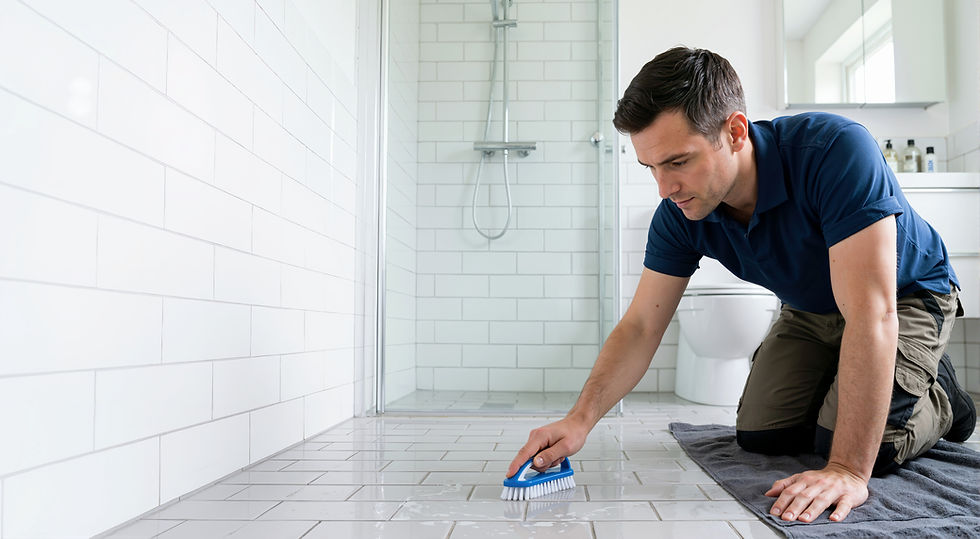
Scrub gently with a soft brush
Rinse with clean water and dry
Baking soda acts as a mild abrasive that helps lift surface grime.
Vinegar Solution
Vinegar can break down certain types of buildup.
Steps:
Spray a vinegar and water solution onto grout
Let it sit for a few minutes
Scrub gently
Rinse thoroughly
Important: Avoid using vinegar on natural stone (like marble or travertine), as it can cause damage.
Hydrogen Peroxide for Stains
For deeper stains, hydrogen peroxide can help lift discoloration.
Apply directly to grout
Let it sit briefly
Scrub gently and rinse
Always test a small area first.
Common Mistakes When Cleaning Grout
Using Harsh Chemicals
Bleach and strong cleaners may seem effective, but they can weaken grout over time, making it even more porous and prone to staining and require professional carpet cleaning to correct.
Scrubbing Too Aggressively
Metal brushes or overly stiff scrubbers can damage both grout and tile.
Gentle scrubbing with the right brush is more effective and safer.
Using Too Much Water
Excess water can soak into grout lines, especially in bathrooms, leading to long-term moisture issues or mildew growth.
Always dry the area after cleaning.
When DIY Cleaning Isn’t Enough
Sometimes, no matter how much you scrub, grout still looks dirty. That’s usually because the problem goes deeper than the surface.
Deep Embedded Dirt
Years of buildup can settle deep inside grout pores, beyond the reach of household cleaning methods.
Permanent Staining
Grease, spills, and hard water minerals can permanently discolor grout. DIY methods may lighten it temporarily but won’t fully restore it.
Mold and Mildew
In damp environments, mold can grow inside grout lines—not just on the surface. This often requires specialized cleaning to fully remove.
Professional Tile and Grout Cleaning: How It Works
Why DIY Methods Fall Short
Most at-home cleaning focuses on surface scrubbing. But grout stains are often embedded much deeper.
That’s why discoloration tends to return quickly after DIY cleaning.
What Professional Cleaning Includes
Professional tile and grout cleaning uses specialized tools and processes to clean below the surface.
A typical service includes:
Inspection of tile and grout condition
Targeted cleaning solutions designed for grout
High-pressure extraction to remove deep-set dirt
Removal of leftover residue from past cleaning attempts
This process restores grout color and removes buildup that regular cleaning can’t reach. Learn more about the process with and grout cleaning.
How to Keep Grout Cleaner Longer
Once your grout is clean, a few simple habits can help maintain it:
Use the Right Cleaners
Stick with pH-balanced products designed for tile and grout.
Clean Spills Quickly
Grease, food, and soap residue can stain grout if left sitting.
Keep Surfaces Dry
Reducing moisture helps prevent mildew and buildup.
Schedule Deep Cleaning
Periodic professional cleaning helps maintain the look of your tile and prevents long-term damage.
Get the Help You Need
Clean grout can completely change how your floors, showers, and tile surfaces look.
While DIY methods can help with light cleaning, they often fall short when dirt and stains are embedded deep in the grout.
Boss Systems Carpet Cleaning & Restoration provides professional tile and grout cleaning designed to go beyond surface-level results. Their process targets the deep buildup that causes grout to look discolored, helping restore its original appearance.
If your grout still looks dirty after repeated cleaning attempts, professional cleaning can make a noticeable difference—and help keep your home looking its best.
Contact us now for a free quote and discover how easy it is to restore the look, smell, and feel of your grout.


Comments